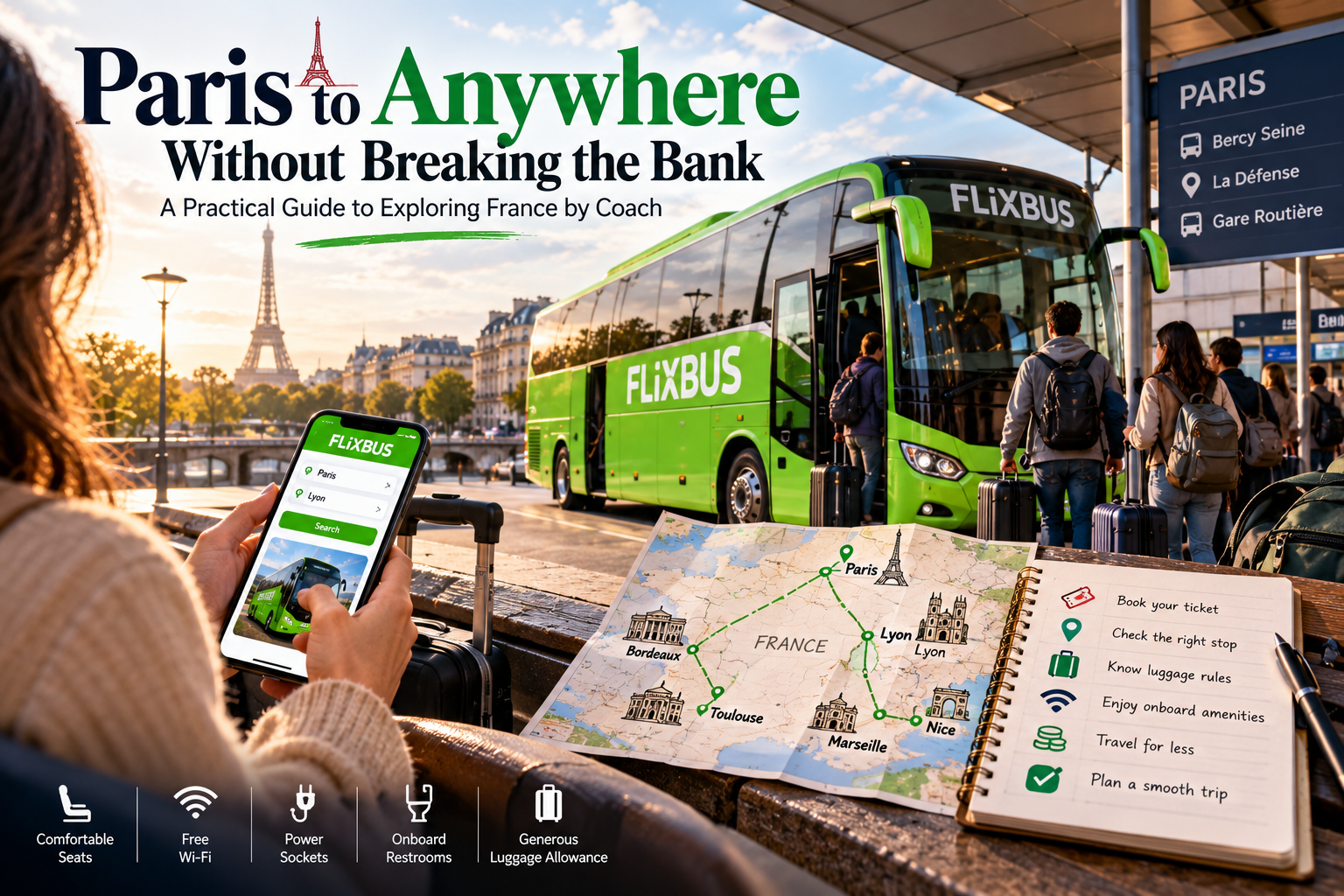
It is Friday evening and you want out of the city. The trains look expensive, the weekend is short and your wallet already feels light. Then you remember the coach. Long distance buses have quietly become a favorite way to cross France, especially for students, solo travelers and anyone who likes a flexible budget. This guide explains how it works in plain words, from picking a station to boarding with a ticket on your phone, using FlixBus as the example. We will keep it honest, covering the good parts and the limits, so you can decide whether a coach fits your next trip.
Why coach travel suits France
France is a country of beautiful cities, from big hubs to small towns that trains do not always reach conveniently. Coaches fill some of those gaps. They often connect places directly, they can be cheaper than other options and they give you a seat with a window and nothing to do but watch the landscape change. The trade-off is that a coach is usually slower than a fast train on major corridors. Think of FlixBus as one option in your toolbox, not the only way to travel.
What is FlixBus, in plain words?
It is a European coach network that sells tickets for long distance journeys through its website and app, including a French site for travel within France and beyond. The company’s own pages describe tickets you can show on your phone, free Wi-Fi on most coaches, power sockets and onboard restrooms. Treat this as Unit 1 of your trip planning: understand what a service offers before you rely on it. Features can differ between routes and vehicles, so read the details of the specific journey you choose on FlixBus before paying, especially the departure stop, the luggage rules and the cancellation conditions.
Know your stop: stations are not all the same
Many travelers get caught by this. A big city can have several coach stops, and they may sit far from each other. In Paris, for example, the company’s route pages list several stops, including Bercy Seine and La Défense, along with other suburban locations. These may be reached by different metro, tram or train lines. Before you buy, check exactly where your coach leaves and arrives, and plan how you will get there. Open a map and estimate the travel time to the stop, adding a safety margin. When you choose a route on FlixBus, copy the stop name into a note, so you do not mix it up on the day.
Booking in a few calm steps
Booking is straightforward when you go step by step. Choose your departure and arrival cities, pick the date and compare the available times. Look at the duration, the number of stops and any transfers. Check the price and what is included, and note the cancellation or rebooking rules shown for the fare. Enter the passenger details exactly as they appear on your ID. The company says it accepts payment methods such as cards, PayPal and Google Pay, though the options you see may vary. Review everything on the last screen before you confirm. A careful booking on FlixBus takes five minutes and prevents most problems.
How to save money without stress
Prices on coaches usually vary with demand, the day and how early you book. Many travelers find that weekdays and off-peak times can be cheaper, and the company itself suggests traveling during non-peak periods to save. Booking earlier often really helps, but it is not a guarantee, so compare a few dates. Remember to add extra costs, such as luggage, local transport to the stop and food for the journey. Treat the final total as the real price. When you compare dates on FlixBus, write down two or three options and choose calmly.
Luggage: what you can bring
Luggage rules are easy to ignore and annoying to discover at the door. According to the company’s route pages, passengers can usually bring one checked bag and one piece of hand luggage free of charge, with size and weight limits, and extra luggage can be added for a fee. Treat this as Unit 1 of your packing check: read the limits for your own journey, since details may vary by route and country. Measure your bag at home and weigh it. Keep valuables, documents and chargers in your hand luggage. If you plan to carry a bike or special items, check availability first. Look at the baggage page on FlixBus before you pack.
Comfort on board
A long coach ride is easier when you prepare. The company says most coaches have free Wi-Fi and power sockets, and the vehicles have restrooms, though availability can differ between buses. Bring headphones, a small blanket or scarf, a refillable water bottle and snacks. Charge your phone fully and carry a power bank in case a socket does not work. Download music, shows or maps before departure, because Wi-Fi can be slow in some areas. A tiny comfort kit can turn a long trip into a pleasant one, and you can plan it while reading the route page on FlixBus.
Boarding day routine
A smooth start sets the tone. Arrive at the stop early, because coach areas can be busy and confusing. Find the correct platform or bay and look for the destination and the bus number on the front. Have your mobile ticket or QR code ready before the driver asks. Keep your ID handy. Load your checked bag when told to, and keep your hand luggage with you. If you cannot find the coach, check the live updates in the app and contact support. Save the booking email from FlixBus where you can open it offline.
Traveling with children
Family trips by coach can be calm if you plan. Check the company’s rules for young travelers, including any child tickets, seating or restrictions for car seats, because policies can differ. Bring snacks, small toys, books and wet wipes, and pick travel times that match your child’s routine. Sit near the front if motion makes anyone queasy. Keep important items within reach, and carry a spare set of clothes. Allow extra time for boarding and toilet breaks. If you are traveling alone with children, think about what you can carry in one trip. When you select seats and options on FlixBus, read the policy for children carefully.
Accessibility and special needs
The company says its coaches are designed to cater to passengers with mobility constraints, and that service animals are welcome on some routes, but details can vary. Treat this as Unit 1 of your accessibility plan: contact support early rather than on the day. Ask about boarding assistance, wheelchair space, how to reserve it and what to expect at the stop. Check whether your station has lifts, ramps or shelter. Bring any documents you may need. If you rely on medication, keep it in your hand luggage. Write down the answers you receive. Reach out through the contact options listed on FlixBus and request confirmation in writing.
Solo traveler tips
Traveling alone by coach is common, and a few habits make it safer and calmer. Share your route and arrival time with someone you trust. Keep your phone charged and download offline maps. Choose a seat where you feel comfortable, and keep your bag close. Be careful with valuables at stations, especially in busy hours or at night. Do not accept rides from strangers after you arrive, and use official transport instead. If something feels wrong, move to a well lit public place and ask staff for help. Save your ticket and support details from FlixBus on your phone and on paper.
Coach or train?
This is the question everyone asks. In France, fast trains can be much quicker on major routes, while coaches can be cheaper and sometimes reach places trains do not serve directly. Neither is always better. Compare the total cost, including transfers, luggage and getting to and from stations. Compare the time, including waiting and buffer. Think about comfort, such as legroom, seat choice and the ability to move around. Check flexibility, because rebooking rules differ. For a short, cheap trip with a relaxed schedule, a coach may win. For a tight schedule, a train may. Put the final totals from FlixBus next to the train options and decide.
Connections and buffer time
Connections are where trips go wrong. If your journey needs a transfer, give yourself plenty of time, because delays and traffic happen. Do not plan a tight connection to a flight or a train that you cannot easily change. Check whether your tickets are on the same booking, and what protection, if any, applies when something goes wrong. Keep your confirmation emails organized. If the coach is delayed, contact support early and ask what options you have. Build in a cushion for the final leg, especially at night. When you assemble a multi step journey with FlixBus, write down every time and stop, and add a safety margin to each.
When things go wrong
Even good plans meet delays, cancellations or a missed stop. Stay calm and check the app for updates. Ask the driver or station staff for help if you are on site. Contact support through the official channels and keep a note of the time, the reference and what you were told. Save your ticket, your receipt and any messages. If the situation changes your plans, ask about rebooking or refunds, and read the terms shown at purchase, because they vary by fare. Do not buy new tickets in panic before you understand your rights. Keep the contact details for FlixBus handy before you travel.
Mistakes to avoid
A few errors repeat. Choosing the wrong stop in a big city. Forgetting to measure and weigh luggage. Leaving no buffer for connections. Assuming every coach has the same facilities. Booking at the last minute without comparing dates. Ignoring the cancellation rules. Trusting a screenshot instead of the actual ticket. Treat this as Unit 1 of your mistake list, and read it before every booking. Whichever company you choose, including FlixBus, a few minutes of attention before you pay can save a stressful hour at the station.
Questions to ask before you book
Where exactly does my coach leave and arrive? How will I reach the stop? How long is the journey, and is there a transfer? What is the total price, including luggage? What can I bring on board? What are the cancellation and rebooking rules for this fare? Are Wi-Fi, sockets and restrooms available on this route? What help is available for accessibility or children? Write the answers down. If anything is unclear, contact support. A few clear answers from FlixBus will make the whole trip feel lighter.
A word of honesty
This post is general information, not travel or legal advice. Details about luggage, facilities, prices, stops and policies come from the company’s public pages and general knowledge, and they vary by route, country and date, so verify everything on the official site before you book. Reviews of coach travel are mixed, and delays and cancellations can happen with any operator. Rules for children, animals and accessibility can differ. And if you decide that FlixBus is not the right fit for a particular trip, that is a sensible outcome of careful comparison.
Final thoughts
Traveling France by coach is not the fastest way, but it can be one of the most flexible and budget friendly. Know your stop, read the luggage rules, leave a buffer and keep your tickets and contacts organized. If the schedule and price work for you, open FlixBus, compare the dates and book the route that suits your plans. Then pack a small snack, charge your phone and enjoy the journey. Sometimes the road itself becomes part of the trip, and a quiet window seat is a pretty good place to watch it unfold.